MANAGING PARTNER
MAXIM FEDOTOV

.webp)

Wholesale electricity arbitrage is a strategic approach that involves purchasing electricity at low prices during surplus hours and selling it at a higher price during peak periods. This model allows for the most efficient use of natural market fluctuations, especially given the growing share of renewable energy sources. Energy Storage Systems (ESS) play a key role in this strategy, providing the necessary flexibility and responsiveness.
The legal team at Fedotov & Partners supports clients in energy arbitrage projects, including transaction modeling, contractual frameworks, and regulatory aspects.
The arbitrage model involves buying electricity at a low price, storing it, and selling it later during periods of high demand. In simple terms, it works like this:
This process requires not only technical implementation but also thorough legal support. Fedotov & Partners provides advice on purchase and sale terms, balancing, and contractual obligations within the Day-Ahead Market and the Intraday Market.
Depending on their needs and scale, market participants can use various technologies to implement an arbitrage strategy:
Developing a technical model must be accompanied by legal analysis and support, ranging from reviewing ESS equipment supply contracts—which includes addressing all nuances regarding the transfer of ownership, liability, and warranty obligations—to grid connection and compliance with market and regulatory requirements. It is essential to consider typical risks, licensing conditions, balancing mechanisms, and market participation rules. A comprehensive approach involving investors, technical consultants, and lawyers is the key to the successful implementation of such projects.
The profitability of an arbitrage model depends on three main factors: the spread between electricity purchase and sale prices, the number of ESS operating cycles, and its capacity. The higher the storage volume, the greater the potential revenue, but capital and operating costs increase accordingly.
The Day-Ahead Market (DAM) and the Intraday Market (IDM) exhibit significant volatility but can potentially offer higher margins than sales under bilateral contracts. Selling under bilateral contracts is more stable, but the price is usually lower than the price established on the DAM. The choice of market segments and the operating model depends on the system's technical characteristics, the participant's strategy, and their risk appetite. Recently, a model where energy storage systems are installed in combination with solar/wind power plants or other types of generation has also been gaining popularity.
Note: The Day-Ahead Market and the Intraday Market are organized market segments (similar to a centralized exchange) administered by Market Operator JSC. The bilateral contract market allows for agreements to be concluded outside of exchanges and platforms, except in cases where legislation explicitly requires otherwise (Art. 66 of the Law of Ukraine "On the Electricity Market").
Choosing between different electricity market segments for buying and selling power, or developing a generation + BESS system, is a critical step when implementing an arbitrage model using battery energy storage systems. Each approach has its own advantages and limitations regarding profitability, predictability, and flexibility.

It is worth noting that the model of using BESS with solar generation is becoming a highly attractive scenario, as the cost of "stored" kilowatts from solar panels is quite low, and BESS allows for electricity to be fed into the grid during peak-price hours. For instance, on July 25, 2025, the NEURC increased the price caps on the day-ahead market to 15,000 UAH per MWh during evening hours.
For more details on the development of the legislative energy framework and the implementation of the European energy package, read the article by FEDOTOV & PARTNERS lawyer Andrii Fedorchuk, "Integration of Ukraine and EU Electricity Markets: Analysis of New Draft Law No. 12087" (https://www.fedotovpartners.com/post/integraciya-rinkiv-elektroenergiyi-ukrayini-ta-ies-analiz-novogo-zakonoproektu-no-12087)
Despite its potential appeal, an arbitrage model using BESS involves a number of risks that must be considered during the planning stage:
The first projects based on the arbitrage model using battery energy storage systems are already being implemented in Ukraine. They demonstrate the potential for balancing the power system and optimizing market participation for businesses.
International experience, particularly from Australia, Spain, and Latvia, confirms the high efficiency of such solutions. BESS are actively used to increase system flexibility, respond rapidly to demand, and create additional revenue streams for energy market participants.
Energy storage systems are a promising tool for implementing arbitrage trading in the wholesale market. Their use allows for:
Arbitrage strategies using energy storage systems are gradually evolving from a pilot practice into a full-fledged business model that combines technological innovation with economic benefits.
We have successfully provided legal support for projects combining energy storage systems with solar generation for active consumers. Over the past six months, the number of client inquiries regarding this specific operating model has increased significantly.
Arbitrage trading significantly improves the economic efficiency of energy storage systems (ESS) and solar power plants in Ukraine. Purchasing electricity during periods of low demand and selling it during peak hours provides a direct financial benefit, transforming ESS from an infrastructure asset into a revenue-generating tool. Furthermore, applying this model significantly shortens the equipment payback period compared to the traditional model of installing only solar generation or only ESS.
Key aspects:
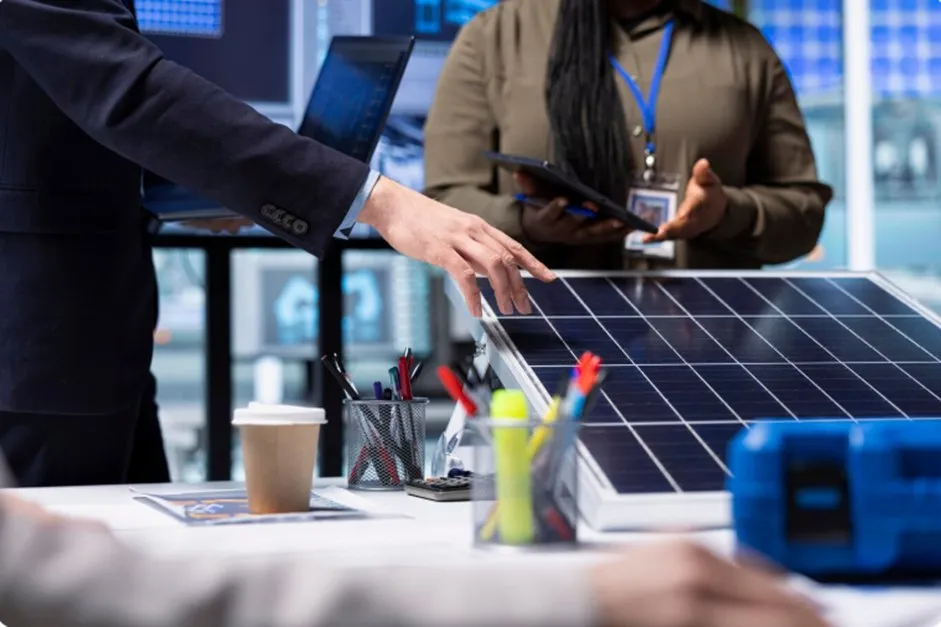
Energy storage activities are subject to licensing if the total installed capacity of the energy storage system (ESS) exceeds 150 kW and the ESS capacity exceeds 150 kWh.
To obtain a license, the following must be submitted to the NEURC:
For the self-generation (typically solar) and energy storage system model discussed above, the legislation establishes specific requirements for licensing energy storage activities.
Under current Ukrainian legislation, electricity producers may install an energy storage system and operate without obtaining an energy storage license, provided certain conditions are met.
In accordance with clause 1.3 of the Licensing Conditions for conducting business activities in energy storage, energy storage activities may be conducted without a license if the energy storage system is used:
Arbitrage trading is an effective model for increasing the profitability and flexibility of energy systems. Its application allows for better integration of solar generation projects, cost optimization, and improved business energy stability, while also enabling a fundamentally new method of electricity trading that is currently proving to be profitable.
For effective implementation of arbitrage trading projects, contact the lawyers at Fedotov & Partners.

.jpg)
.jpg)



.jpg)


.jpg)
.jpg)


.jpg)
.webp)