MANAGING PARTNER
MAXIM FEDOTOV



The National Energy and Utilities Regulatory Commission (NEURC) is a central executive body with a special status. Its primary mission is to balance the interests of consumers, energy and utility companies, and the state, while strengthening Ukraine's energy security and integrating its energy markets with the European Union.
The NEURC performs a range of core functions that define its role in regulating energy and utility markets. These include regulatory and legal oversight, licensing activities in specific sectors, setting tariff policies, monitoring compliance with legislation and license conditions, protecting consumer rights, and promoting infrastructure development and energy-efficient technologies. Particular attention is given to supporting investment, fostering market competition, and aligning the industry with European standards.
The NEURC’s activities are governed by the Constitution of Ukraine, specialized legislation (the Law on the NEURC), and subordinate legal acts. The regulator sets tariffs for centralized water supply, drainage, heating, and electricity distribution and transmission, as well as price caps for the day-ahead, intraday, and balancing markets. One of the Commission's tasks is to delineate powers with local authorities regarding tariff regulation and service access conditions. The NEURC ensures transparency and competition while adapting markets to the requirements of European integration.

Legal tip: Before submitting a license application, it is advisable to conduct a legal audit of your company's readiness to meet regulatory requirements. This helps identify weaknesses and prevents potential rejections or delays in the licensing process.
Companies operating in the energy and utility sectors must account for the specific regulatory requirements of the NEURC. Specifically, a license is required to operate in these fields. Licenses may be suspended or revoked for violations of license conditions, late reporting, or failure to meet financial obligations. Recent updates provide detailed procedures for submitting reports and requirements for documenting the remediation of violations.
The NEURC also sets tariffs for businesses. For example, a significant increase in electricity transmission tariffs is expected from 2025, which directly impacts corporate financial planning. Businesses must submit reports regularly, undergo audits, respond to directives, and promptly address violations to avoid sanctions, such as fines or license suspension.
Another key power of the NEURC is establishing rules for infrastructure access. The regulator defines procedures for grid connection, coordinates infrastructure investment, and ensures non-discriminatory access to the services of natural monopolies.
Changes in the regulatory framework and pricing mechanisms require businesses to constantly monitor and adapt their internal procedures. Timely reporting, compliance with new licensing requirements, and transparent interaction with the regulator all reduce the risk of sanctions and improve operational efficiency in regulated markets.
The National Commission holds a special legal status defined by its governing law. Under current legislation, the NEURC is a central executive body with a special status, established by the Cabinet of Ministers of Ukraine. It previously functioned as an independent collegiate body created by presidential decree, but following Constitutional Court rulings, its status was changed, and it became part of the executive branch system.
The Commission operates based on the Constitution, laws, government acts, and its own regulatory documents. The NEURC’s special status provides for specific conditions regarding the appointment and dismissal of members, as well as guarantees of independence in exercising its powers. Although the legislation does not establish the Commission's full independence in the European sense, certain elements of autonomy remain, such as the competitive appointment of members and the Chairperson.

The NEURC oversees business entities operating in the sectors of electricity, heating, water supply, drainage, natural gas, and other utility services. This includes producers, electricity transmission and distribution operators, gas companies, heat-generating enterprises, water utilities, and more.
All these entities are required to obtain licenses, comply with regulatory requirements, submit reports, and coordinate tariffs with the NEURC. Some enterprises, particularly certain heat supply organizations, may be regulated by local authorities if provided for by law. However, in general, any activity within natural monopolies or regulated markets is subject to oversight by the Commission.
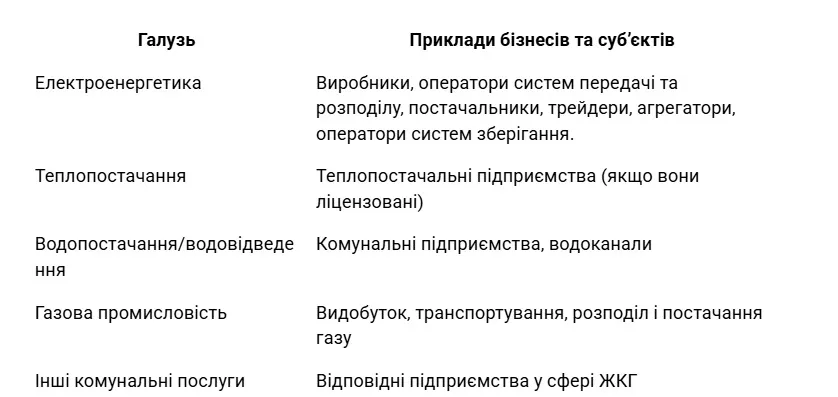
Key violations by businesses include: reporting errors (incorrect activity codes, late submissions), failure to comply with license requirements, improper contract drafting, fiscalization errors, and using standard accounts (2600) to receive payments from regulated activities instead of special accounts (2603). It is also common for companies to fail to respond to regulator directives in a timely manner or to monitor tariff changes insufficiently, leading to financial losses.
Legal advice: It is recommended to implement an internal double-check policy for reports before submitting them to the NEURC, involving both the finance and legal departments. This significantly reduces the risk of errors that could lead to sanctions.
To minimize risks and ensure compliance with NEURC requirements, businesses should implement the following tools: involving specialists in the licensing process, creating internal policies in accordance with the regulatory framework, conducting regular documentation audits, training staff, and monitoring regulatory changes. Legal support during inspections, timely responses to directives, and effective communication with the regulator are all key to successful market operations.
Legal advice: It is advisable for companies to enter into long-term legal support agreements with specialists in energy law. Ongoing support allows for quick responses to changes in regulatory policy and ensures that inspections proceed without complications.
The activities of the NEURC directly affect business operations in the energy and utilities sectors. Compliance with regulatory requirements, competent legal support, timely reporting, and adaptation to changes in the regulatory framework are key factors for stable and effective interaction with the Commission.
If you need legal support in your interactions with the NEURC, from obtaining licenses to challenging directives, you can contact the Fedotov & Partners team. We have experience in supporting businesses in the regulated energy and utilities sectors.

.jpg)
.jpg)



.jpg)


.jpg)
.jpg)


.jpg)
.webp)